 EN
EN

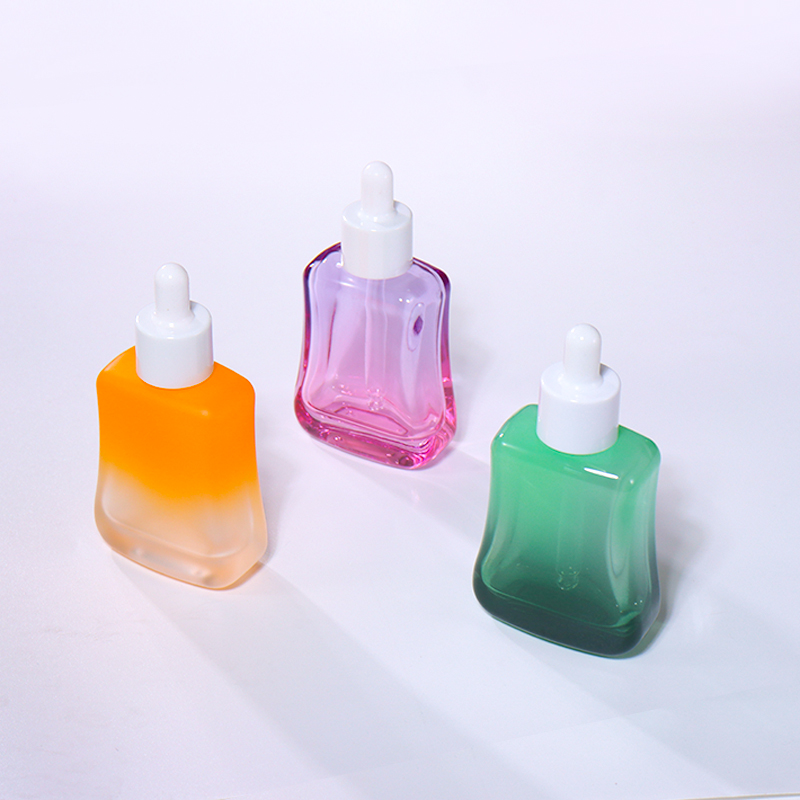
The Ink on Glass Challenge: How to Print a Logo on an Essential Oil Bottle That Lasts
Essential oils are chemically aggressive. Limonene from citrus oils, eugenol from clove, and terpinene from tea tree dissolve many common printing inks and adhesives on contact. A logo printed on an essential oil bottle that looks pristine on day one but smudges after the first use — when a drop of oil inevitably runs down the bottle neck — sends a quality signal more damaging than no logo at all, because the smudge implies poor manufacturing standards to a customer already questioning whether the bottle's contents match the label's claims.
The decoration method for an essential oil bottle must therefore satisfy two independent requirements: adhesion durability (the ink must bond to the glass surface strongly enough to resist essential-oil chemical attack) and aesthetic quality (the logo must look intentional, not cheap). Three printing technologies dominate the glass cosmetic bottle market, each with a different balance of these two attributes. Guangzhou Hiyeah Packaging operates all three processes in-house — silk-screen printing (high and low temperature), hot stamping, and 3D printing — eliminating the subcontractor delays and quality inconsistencies that occur when decoration is outsourced to a separate facility.
Decoration Methods: Strengths and Limitations
Silk-Screen Printing: The Workhorse of Glass Decoration
Silk-screen printing pushes ink through a fine mesh stencil onto the glass surface, depositing a uniform ink layer typically 10–20 microns thick. High-temperature curing at 150–180°C fuses ceramic-based inks into the glass surface, creating a bond that resists essential oil, alcohol, and water equally — the gold standard for durability. Low-temperature curing at 80–120°C uses organic-solvent-based inks that sit on the glass surface rather than fusing into it, with correspondingly lower chemical resistance but faster processing and lower cost. For essential oil bottles, high-temperature ceramic silk-screen printing is the safer choice — the ink survives the first oil spill without smudging.
Hot Stamping: Metallic Prestige
Hot stamping transfers a thin metallic foil (gold, silver, copper, holographic) onto the glass surface using a heated die that applies pressure and temperature simultaneously. The result is a mirror-bright logo that catches light — ideal for luxury essential oil brands positioning themselves at premium price points. The tradeoff: hot-stamped foil bonds to glass through a release layer that can be compromised by repeated oil contact, making hot stamping better suited for brand marks placed on the bottle shoulder or cap — areas less likely to contact oil during dispensing.
Real-World Application: An Aromatherapy Brand's Label-Free Bottle
An aromatherapy brand selling through wellness boutiques in North America wanted to eliminate paper labels from its essential oil bottles entirely — the labels were peeling in humid bathroom environments and the brand wanted the minimalist aesthetic of decoration directly on glass. The challenge was printing a two-color logo (dark green and gold) on a curved 10 ml bottle surface where the print area measures only 15 mm in height.
Hiyeah Packaging's silk-screen printing line applied the dark green logo in ceramic ink cured at 170°C — fusing the ink into the glass for permanent chemical resistance. A hot-stamped gold accent on the bottle cap completed the two-color effect without placing gold foil on the bottle body where oil contact could degrade it. The result eliminated paper labels entirely while maintaining brand visibility, and the brand reported zero decoration-related returns in the first year of the redesigned bottle program.
Frequently Asked Questions
Will silk-screen printing survive essential oil spills?
High-temperature ceramic silk-screen printing bonds into the glass surface at 150–180°C, creating chemical resistance that withstands essential oil, alcohol, and water exposure equally. Low-temperature organic-ink silk-screen printing sits on the glass surface and will degrade with repeated oil contact. Hiyeah Packaging offers both high-temperature and low-temperature silk-screen printing depending on durability requirements and budget.
How small can a printed logo be?
Silk-screen printing can reproduce details down to approximately 0.5 mm line width on glass — smaller than that and the ink bridges across the mesh holes, losing edge definition. Hot stamping can reproduce slightly finer detail because the foil transfers via a precisely machined metal die. For micro-text below 0.3 mm, laser engraving may be required.
What is the minimum order for custom logo printing?
Decoration-only orders (printing on an existing bottle shape) typically have minimums of 500–1,000 units depending on the number of colors and the decoration complexity. Multi-color silk-screen printing that requires separate screens and registration for each color has higher setup costs that favor larger order quantities. Hiyeah Packaging provides rapid sample turnaround — 48 hours from artwork approval for decoration samples.
Can I print a logo on a curved bottle surface?
Yes, silk-screen printing on curved surfaces uses a curved screen and squeegee that follow the bottle's radius. However, the printable area is limited by the surface curvature — a bottle with a tight radius (under 15 mm) may restrict the printable zone to a narrow band. Hot stamping on curved surfaces uses a silicone die that conforms to the curvature.
How do I verify print adhesion quality?
Perform a tape test: apply 3M 610 adhesive tape to the printed area, press firmly, and peel at a 90-degree angle. No more than 5% ink removal is considered acceptable. For essential oil chemical resistance, rub the printed area with a cotton swab saturated in the product's primary oil component and check for ink transfer to the swab.
Can multiple decoration methods be combined on one bottle?
Yes. A common combination is silk-screen printing for the main logo (durable, chemical-resistant) with hot stamping for a metallic accent (premium visual effect) on a separate area of the bottle. Hiyeah Packaging's in-house decoration lines support multi-process decoration within a single production workflow.