 EN
EN

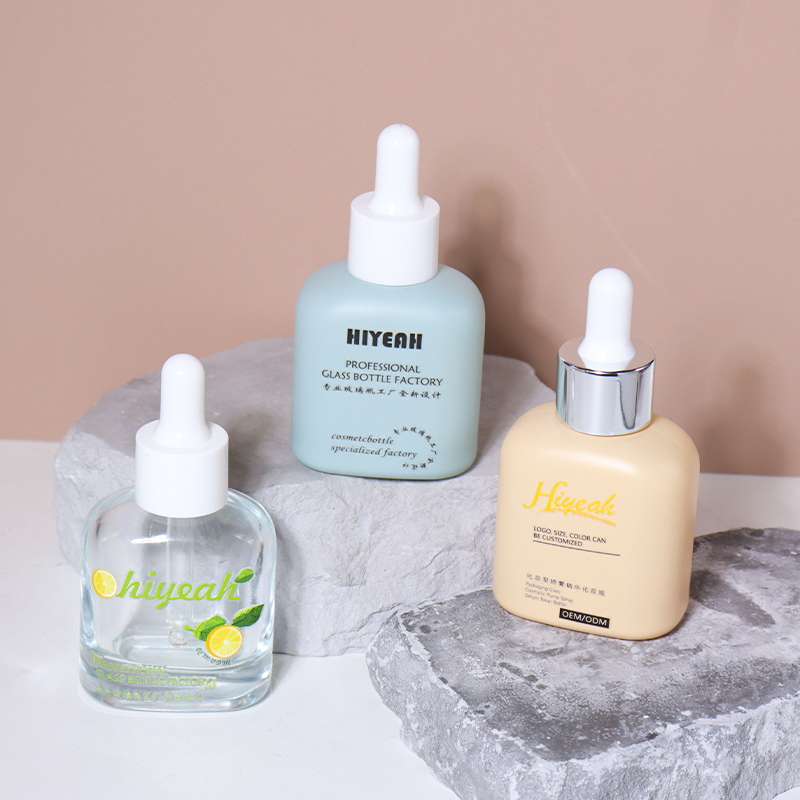
The Science Behind Consistent Drop Formation
How surface tension, viscosity, and gravity interact to determine drop volume
Every time liquid leaves a dropper bottle, three physical forces compete: surface tension pulls the liquid into a sphere, viscosity resists flow, and gravity pulls it downward. Their balance determines the exact volume that detaches. High surface tension—as in water—produces larger, more stable drops that cling longer to the tip. High viscosity, typical of thick oils, slows column elongation and often yields larger drops at low flow rates. Gravity acts as the constant force that ultimately overcomes cohesion and adhesion, triggering detachment. Crucially, even minor changes in liquid properties or tip geometry shift this equilibrium—altering drop volume significantly. Understanding this interplay enables manufacturers to engineer dropper bottles that deliver consistent dosing across diverse formulations.
Why ‘one drop’ varies by formulation: CBD oil vs. alcohol-based tinctures vs. aqueous pharmaceuticals
The phrase “one drop” has no universal size. A dropper calibrated for water delivers markedly different volumes when filled with CBD oil, alcohol-based tinctures, or aqueous pharmaceuticals. CBD oil’s high viscosity results in a thicker liquid thread before detachment, yielding drops of 40–50 µL—nearly double water’s typical 20–25 µL. Alcohol-based tinctures, with low viscosity and low surface tension, form smaller, faster-detaching drops—often as little as 15 µL. Aqueous pharmaceuticals fall between these extremes. These differences are clinically meaningful: uncalibrated use can introduce dosing errors exceeding 50%. That’s why formulators must validate each product’s drop profile empirically—not assume interchangeability—ensuring accurate, repeatable delivery.
Critical Design Factors That Impact Dropper Bottle Accuracy
Even a perfectly formulated liquid becomes unreliable if the dropper bottle’s engineering is flawed. Two interconnected components dominate accuracy: the tip orifice and the compression bulb. A misstep in either can turn a precision tool into a source of batch-to-batch inconsistency.
Tip orifice diameter and geometry: Quantifying the 42% drop volume shift between 0.5 mm and 1.2 mm tips
The tip orifice diameter is the single largest determinant of drop volume. Controlled laboratory testing shows that increasing the orifice from 0.5 mm to 1.2 mm increases average drop volume by 42%, primarily due to reduced meniscus curvature and weakened surface tension resistance. Geometry matters equally: sharp, burr-free edges promote clean, symmetric detachment; rough or irregular tips cause erratic dripping and inconsistent volume. For low-viscosity formulations like alcohol-based tinctures, a 0.6 mm tip typically delivers ~20 drops per milliliter, while a 1.0 mm tip reduces that to ~14. Therefore, orifice specification must be matched precisely to the product’s rheology during design validation—not selected generically.
Bulb responsiveness: Latex, silicone, and LDPE performance under repeated compression cycles
After the tip, the bulb governs liquid draw and expulsion. Three materials dominate: natural latex, silicone, and LDPE (low-density polyethylene). Latex offers excellent elasticity and rapid recovery but degrades when exposed repeatedly to oils or alcohol, hardening over time and reducing suction capacity. Silicone resists chemical attack and retains flexibility longer, though its higher stiffness may require greater manual force to achieve equivalent vacuum. LDPE is cost-effective and chemically inert but loses resilience after approximately 15,000 compressions—a subtle failure mode that gradually reduces draw volume without obvious user cues. The most reliable systems pair a silicone bulb with a precision-molded orifice, delivering consistent compression-recovery behavior across polar and non-polar formulations over extended use.
Verification Standards: How to Identify a Truly Precision-Calibrated Dropper Bottle
Beyond printed markings: Why ASTM D3598‑22 compliance requires volumetric 20‑drop testing
Printed graduation marks on a dropper bottle offer visual guidance—but not dosing assurance. Because viscosity and surface tension dramatically affect drop formation, a single drop can vary by more than 40% across formulations, rendering scale markings unreliable for precise delivery. True calibration demands compliance with ASTM D3598‑22, which mandates volumetric 20-drop testing to verify average drop weight across production batches. This standard accounts for real-world variables—including tip geometry, material interaction, and liquid rheology—to ensure consistent performance. For B2B buyers, requesting documented 20-drop test reports—not just claims of compliance—is the only objective way to confirm that a dropper bottle will perform to specification, not merely meet aesthetic expectations.
Material & Compatibility Considerations for Reliable Dropper Bottle Performance
Material selection directly affects dosing accuracy and long-term reliability. Glass pipettes provide superior chemical inertness, protecting sensitive actives in formulations like CBD oil from leaching or degradation. Yet the bulb remains a vulnerability: essential oils or alcohol-based tinctures can cause standard latex to swell or crack, altering suction force and drop volume by up to 42% over time. Silicone and specialized nitrile rubbers offer enhanced solvent resistance but must still be verified against the specific formulation. For aqueous pharmaceuticals, LDPE bulbs maintain flexibility but permit gradual oxygen permeation—potentially compromising stability in oxidation-sensitive products. Accelerated aging tests (4–12 weeks across temperature gradients) using the final product are essential to uncover incompatibilities before scale-up—preventing costly failures such as viscosity shifts or active ingredient destabilization that erode dosing precision.
FAQ
What determines the exact volume of a drop?
The volume of a drop is determined by the interaction of surface tension, viscosity, and gravity. Surface tension pulls the liquid into a sphere, viscosity resists flow, and gravity eventually overcomes these forces to cause detachment.
Why does the size of a drop vary with different formulations?
Different formulations, such as CBD oil, alcohol-based tinctures, and aqueous pharmaceuticals, have varying viscosities and surface tensions, resulting in different sizes of drops even with the same dropper.
How does the tip orifice diameter impact dropper accuracy?
The tip orifice diameter is crucial for controlling drop size. A larger orifice reduces surface tension resistance and increases drop volume, while a smaller orifice produces finer drops.
What materials are most reliable for dropper bottle components?
Materials like glass for pipettes and silicone for bulbs are generally more reliable. They offer better chemical resistance and retain performance across formulations compared to latex or LDPE.
Why is ASTM D3598‑22 compliance important?
ASTM D3598‑22 compliance involves volumetric 20-drop testing to ensure consistent drop performance. This standard accounts for real-world variables, offering true calibration versus reliance on printed markings.